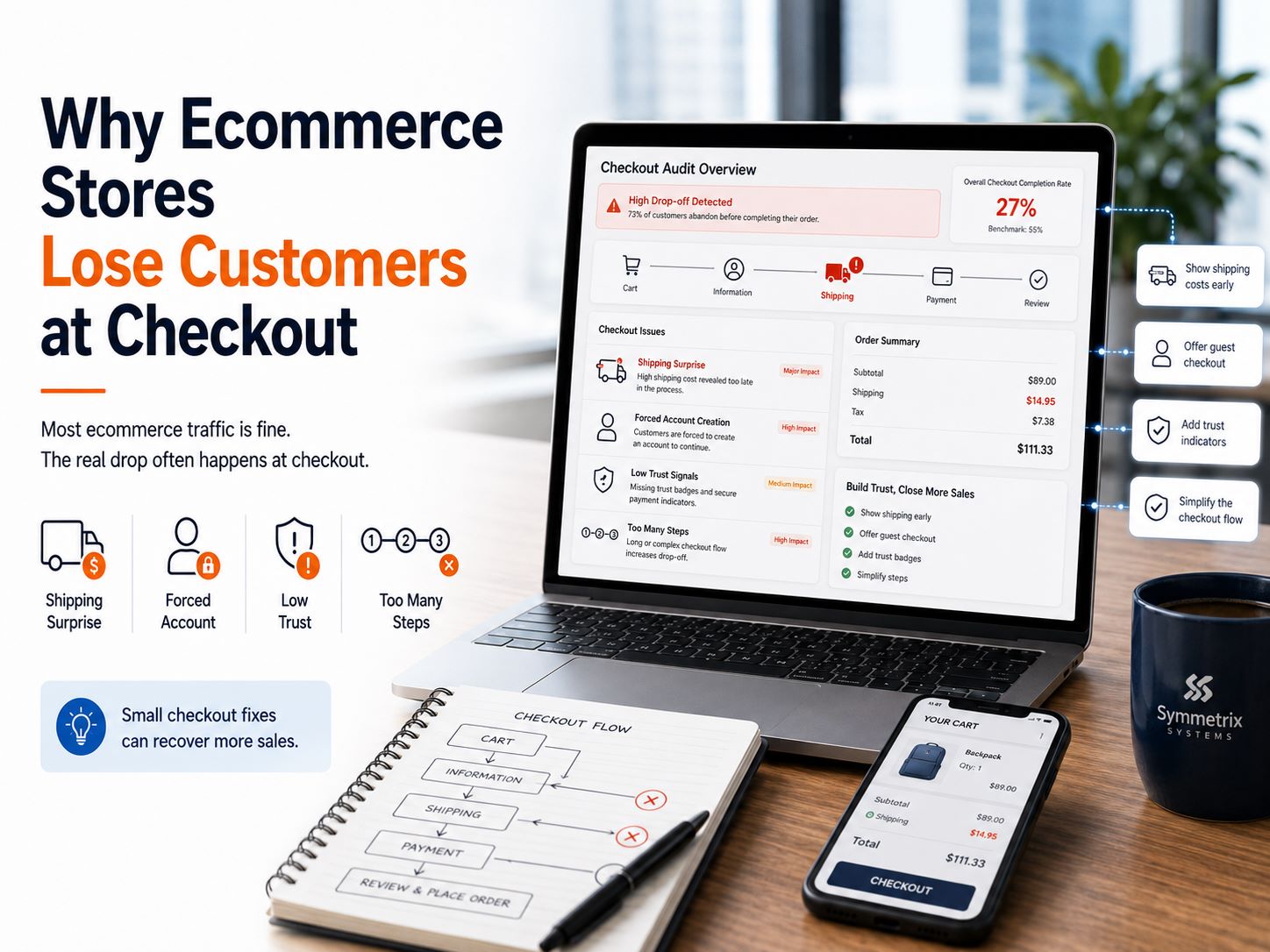
A lot of store owners spend their energy on the homepage and product photos, then wonder why sales still feel slow.
The real leak is usually further down the funnel, right at checkout.
Shoppers add something to the cart, get interested, and then back out before paying, and it rarely has anything to do with the product itself.
The Shipping Cost Surprise
Shipping cost is the most common reason people abandon a cart.
If a customer only sees the final price on the last page, after entering their address and card details, that surprise is often enough to make them close the tab.
The fix is simple: show shipping estimates early, ideally right on the product page, so there are no surprises later.
Forcing an Account at the Wrong Moment
Account creation is another quiet killer.
Forcing someone to register before they can buy adds friction at the exact moment they were ready to pay.
A proper guest checkout option, with account creation offered afterwards once the sale is done, keeps that momentum intact instead of interrupting it.
Missing Trust Signals
Trust plays a bigger role than most owners assume.
A checkout page without visible payment logos, a return policy link, or basic contact details can make even a genuine store feel risky to a first-time buyer, especially on mobile where everything already feels a bit more rushed.
A Checkout That Takes Too Many Steps
Every extra field or click between “add to cart” and “order confirmed” is another chance for a shopper to change their mind.
Long forms, unnecessary fields like a fax number or a second address line, and a lack of autofill support all add small amounts of friction that build up.
On mobile especially, a checkout that takes more than three or four steps tends to lose people who would have completed a shorter one without a second thought.
None of this needs a full rebuild.
Most of it comes down to checkout copy, page order, and a handful of missing trust signals.
If you are not sure where your own store is losing people, it is worth having your checkout flow reviewed properly before assuming the whole store needs work.