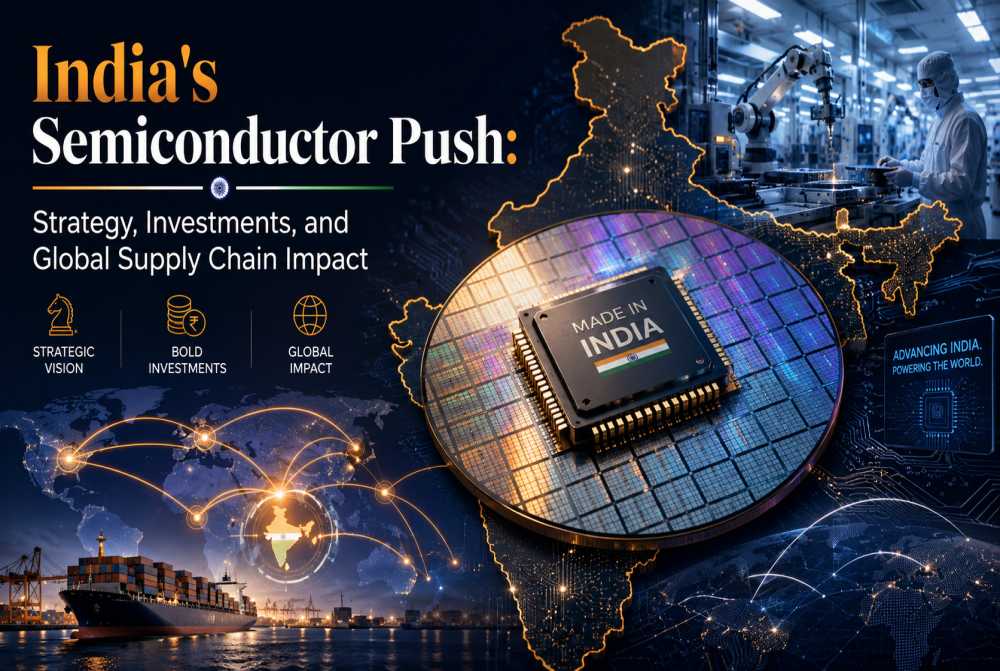
India’s Semiconductor Push Is Moving Into Execution
India’s semiconductor push is shifting from high-level intent to implementation. With policy incentives, strategic partnerships, and ecosystem planning, the country is positioning itself for a larger role in global chip value chains.
This shift matters because semiconductors power critical sectors including consumer electronics, telecom, automotive, data centers, industrial systems, and defense technologies.
Why India Is Prioritizing Semiconductors
- Global chip disruptions highlighted geographic concentration risk.
- India’s domestic electronics demand is growing quickly.
- Technology resilience now depends on secure chip access and packaging capacity.
India’s policy direction combines economic development goals with long-term strategic resilience.
Key Pillars of India’s Semiconductor Strategy
1. Policy Support and Incentives
Incentive structures and policy support are designed to reduce early-stage risk in capital-intensive semiconductor projects and improve investment viability.
2. Ecosystem Development Beyond Fabs
India is focusing not only on fabrication but also on assembly, testing, packaging, materials, utilities reliability, and logistics infrastructure.
3. Talent and Design Capabilities
India already has strong semiconductor design talent. Better integration between design, packaging, testing, and manufacturing support can improve end-to-end value capture.
What Progress Should Look Like
- Approved facilities becoming operational on schedule.
- Expansion in domestic packaging and testing capacity.
- Higher participation by global and local firms in India-based supply chains.
- Growth in high-skill semiconductor jobs.
- Improved contribution from electronics and chip-linked exports.
Execution Challenges to Watch
- High capital requirements and long ramp-up timelines.
- Need for reliable power, water, and industrial infrastructure.
- Global competition for technology partnerships and specialized talent.
- Fast technology cycles that can reduce competitiveness if execution lags.
Policy continuity and milestone-based implementation will be central to sustained progress.
Global Supply Chain Implications
If India scales effectively, global electronics and semiconductor supply chains gain greater geographic diversification. For businesses, this creates opportunities across packaging, testing, engineering services, and ecosystem partnerships.
Conclusion
India’s semiconductor push is a long-horizon industrial strategy. The direction is clear: build domestic capability, reduce structural vulnerability, and participate more deeply in global technology production networks.
Execution quality will determine outcomes. Disciplined implementation can make India a more significant semiconductor node over time.
FAQs
What is India’s semiconductor push?
It is a national effort to build semiconductor capacity through policy support, incentives, and ecosystem development across manufacturing, assembly, testing, packaging, and design.
Why is this strategically important for India?
Semiconductors are foundational to modern industries. Domestic capability supports supply resilience, industrial growth, and long-term technology security.
Is India focusing only on chip fabrication?
No. The strategy also includes packaging, testing, talent development, and supporting infrastructure required for a durable ecosystem.
What should businesses monitor next?
Businesses should watch facility timelines, policy execution consistency, ecosystem maturity, and partnership opportunities across the semiconductor value chain.