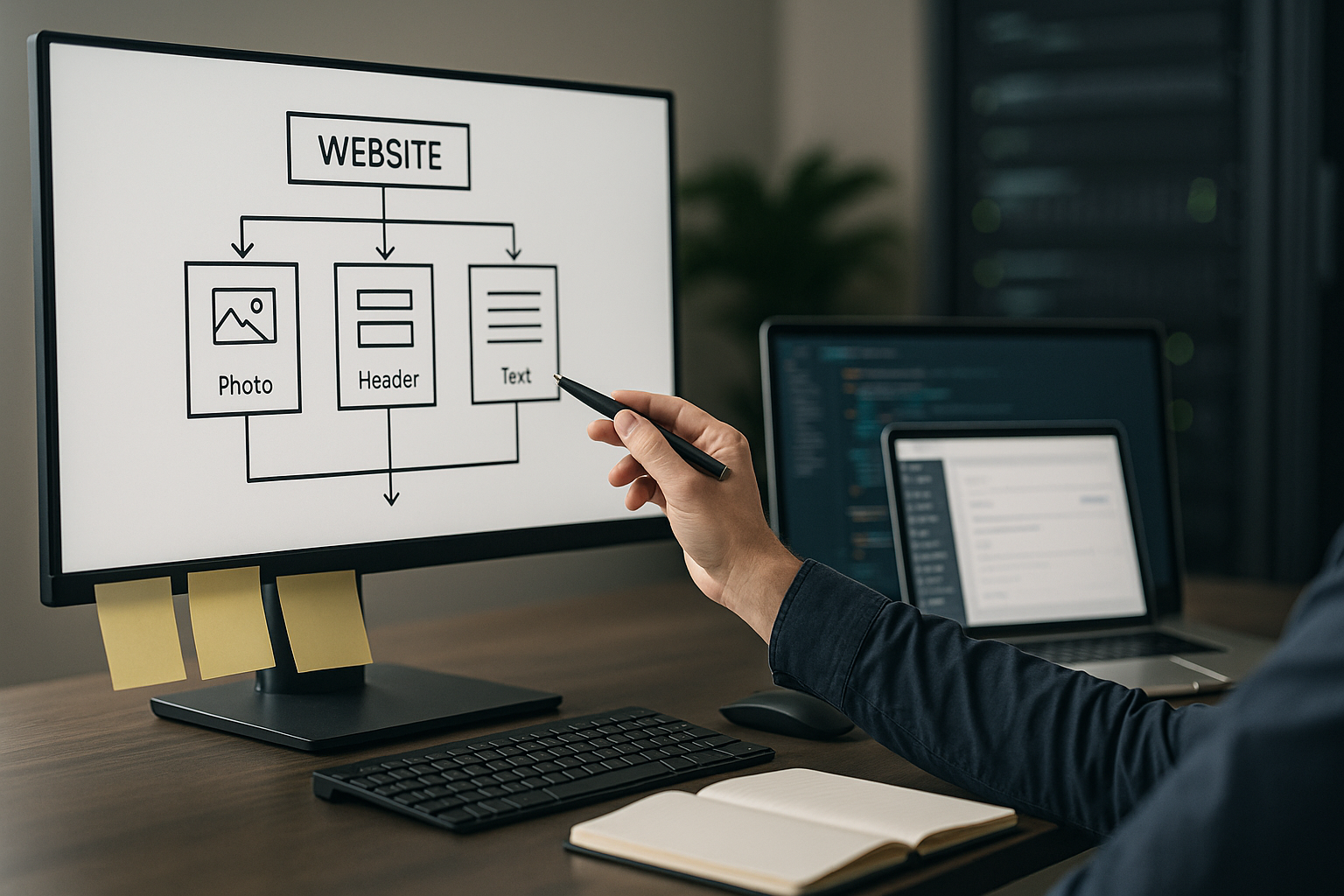
When a website has to support content teams, product pages, landing pages, and future integrations, a traditional CMS can start feeling restrictive. Editorial teams want speed. Developers want flexibility. Businesses want a system that does not need a rebuild every time the digital experience changes. That is where a headless CMS becomes a practical option.
A headless CMS separates content management from presentation. Content is created in one system and delivered through APIs to websites, apps, kiosks, or other digital channels. This model is especially useful when a business expects its website to grow beyond one simple front end.
What a headless CMS changes in a web project
In a traditional CMS, the backend and frontend are closely connected. That can be convenient for simple sites, but it can limit how content is reused across platforms. A headless CMS removes that coupling. Marketers and editors still manage content in one place, but developers choose the best front end framework for the project.
This matters when a business wants a fast marketing site, a product portal, and a mobile app to all pull from the same content source. It also helps when the design needs to change without reworking the editorial process. For teams planning modern web development services, this separation can make architecture decisions much easier.
When headless makes more sense than a traditional CMS
A headless CMS is not the right answer for every website. It works best when the project has clear content complexity or multi channel needs. Common situations include:
- Websites that serve content to more than one platform
- Businesses planning a custom frontend experience
- Teams that need API based integrations with CRM, commerce, or app systems
- Projects where performance and frontend flexibility matter more than built in themes
It can also be useful when the content structure is more important than page templates. For example, a company may want a single source for service details, case studies, FAQs, and blog content that can appear in different formats across the website and app.
Planning content models before development starts
The biggest mistake in headless projects is treating content like a direct copy of old pages. Headless architecture works better when content is planned as reusable blocks and structured entries. That means defining fields for the content team instead of locking everything into one long page layout.
Before development begins, teams should decide how each content type will be used. Questions to ask include:
- What content needs to appear on multiple pages?
- Which sections need to be reusable across campaigns?
- What content should be editable by non technical users?
- Which design elements will be controlled by the frontend only?
This planning phase saves time later. It reduces the risk of building a system that looks flexible but is difficult for editors to manage. It also helps keep the site scalable as new pages, services, and campaigns are added.
API connections, frontend choice, and workflow fit
One of the main strengths of a headless CMS is the ability to connect with other systems. Content can be delivered through APIs to a website built in React, Vue, Next.js, or another framework. It can also connect to ecommerce tools, forms, product databases, and automation layers.
That flexibility is valuable, but it also increases the need for clear planning. Developers must think about preview workflows, content scheduling, permissions, and fallback behavior. Editors should know how approvals work and how updates appear on the live site. If the workflow is not designed properly, the team may gain flexibility but lose clarity.
This is also where workflow automation solutions can help by linking content operations with approvals, notifications, and publishing steps. For projects that rely on content APIs, it is also wise to review the official Web API documentation so the development team can align the implementation with browser and integration standards.
What businesses should weigh before choosing headless
A headless CMS can be a strong fit, but it usually requires more technical planning than a basic website builder or standard CMS setup. Businesses should consider the following tradeoffs:
- Higher upfront architecture planning
- More developer involvement for front end updates
- Need for a structured content strategy
- Potentially more complex preview and publishing workflows
At the same time, the benefits can be significant for the right project. A headless setup can support long term flexibility, cleaner content reuse, and a better foundation for multi channel delivery. It is often a smart choice when the website is meant to grow into a broader digital platform rather than remain a static marketing site.
If your business is considering a content platform that can support future websites, apps, and integrations, the right starting point is a proper architecture review. You can explore our broader digital solutions approach to see how content structure, frontend planning, and system integration can work together from the beginning.
Follow Symmetrix Systems on Google
Add Symmetrix Systems as a preferred source
to discover more of our articles and insights
through Google Search.